
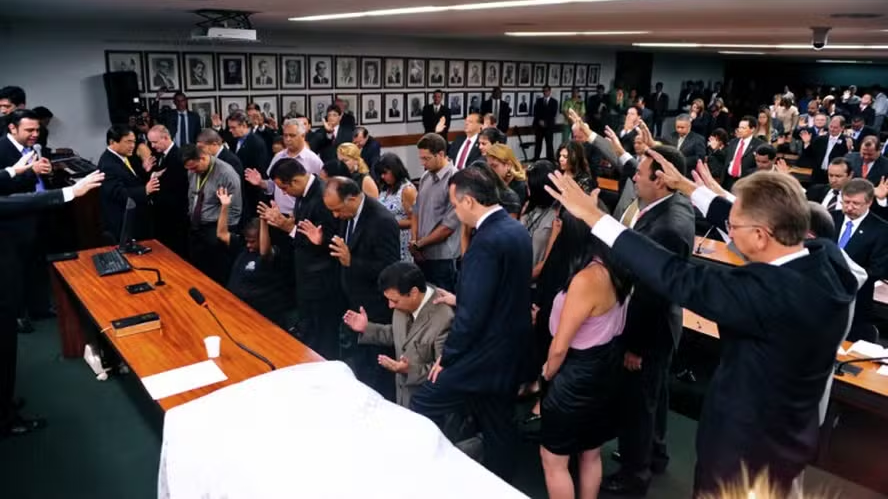
The Electoral Code reform debated in the Senate would allow partisan political statements in places of worship and limit religious abuse of power to cases of explicit coercion. In practice, leaders could endorse candidates during services or masses with less oversight from electoral courts.
The current rule seeks to prevent spiritual authority and privileged access to assembled audiences from becoming an electoral advantage. This limit protects both equality among candidates and worshippers’ freedom of conscience.
Pulpits should not become campaign platforms
Places of worship bring together lasting communities, benefit from tax exemptions, and give their leaders moral authority. Allowing campaigning in these settings would create an asymmetry in relation to associations, unions, and other organizations subject to stricter controls.
It would also increase the risk of indirect pressure on people who seek the community for reasons of faith, support, or belonging—not to participate in partisan activity.
Secularism protects democracy
Separating State and religion does not mean hostility toward faith. The principle seeks to prevent any belief, leader, or organization from receiving privileged access to the structures of public power.
Before loosening the limits, Congress must consider the effects on electoral competition, transparency, and religious autonomy. Mixing devotion and campaigning can compromise all three.
This page presents the Observatory’s editorial content in a reading format.
View original publication